
Commercial air conditioning systems compared
Splits, cassettes, ducted, VRF, rooftop units: commercial air conditioning comes in a lot of shapes. This guide explains how each type works, what kind of building it suits and what drives the cost, so you can have a better conversation with whoever quotes it.
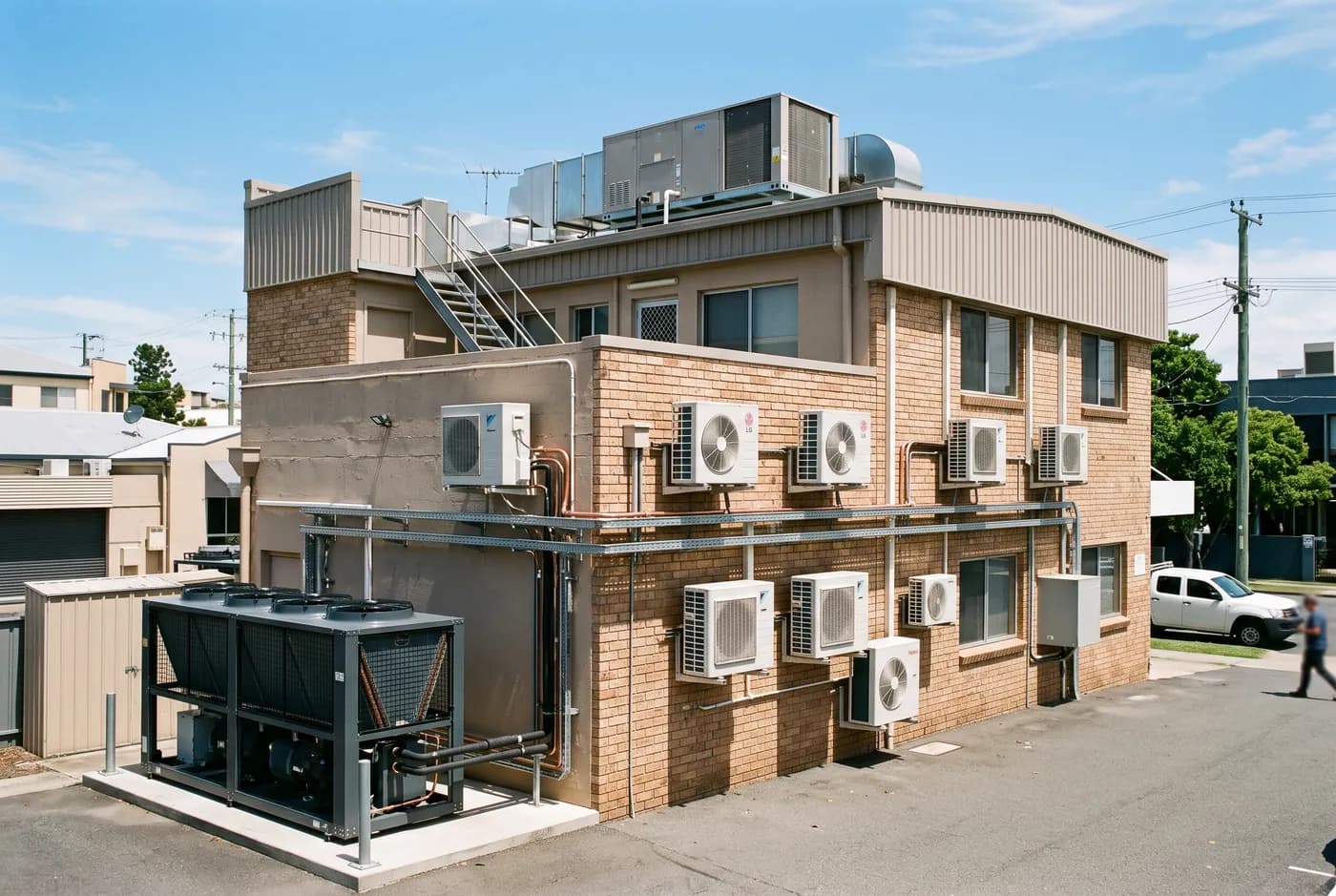
What HVAC systems are used in commercial buildings?
The main air conditioning systems used in commercial buildings are wall split and multi-head systems, ceiling cassettes, under-ceiling units, ducted systems, VRF / VRV systems and packaged rooftop units, with very large buildings sometimes using central chilled-water plant. Small offices and shops are often served by splits or cassettes, open floors and larger fit-outs by cassettes or ducted systems, and multi-room buildings that need individual control by VRF / VRV.
The right system depends on the size and layout of the space, how many zones need separate control, running hours, the people and equipment in each area, and where outdoor plant can go. Coola Air Conditioning assesses commercial sites across Brisbane's northern suburbs and recommends a system to suit.
Commercial systems at a glance
How each type works, what it suits and the trade-offs to weigh.
| System | How it works | Best suited to | Things to weigh |
|---|---|---|---|
| Wall split & multi-head | An indoor head on the wall connected to an outdoor unit. Multi-head runs several heads from one outdoor unit. | Small offices, consult rooms, comms rooms, lunchrooms and single shops. | Simple and cost-effective, but visible on the wall and best for one room or a few. |
| Ceiling cassette | The indoor unit sits in the ceiling void with a square grille, usually blowing air four ways. | Open-plan offices, shops, cafes and medical waiting rooms. | Discreet and even, but needs ceiling space above and a condensate drain. |
| Under-ceiling | A slim indoor unit mounted against the ceiling surface that throws air a long way across a room. | Shops, restaurants and spaces with exposed or no ceiling void. | No ceiling void needed, but the unit is on show. |
| Ducted | A central indoor unit, usually in the ceiling, pushes air through ductwork to grilles in each area. | Larger fit-outs and open floors where a clean, concealed look matters. | Concealed and zonable, but needs ceiling space for ducts and more design work. |
| VRF / VRV | Many indoor units of different types on one refrigerant network, run from shared outdoor plant. | Multi-room offices, medical and professional suites, multi-tenancy buildings. | Individual control and efficient at part load, but a bigger investment that needs specialist servicing. |
| Packaged rooftop unit | All components in one weatherproof cabinet on the roof, supplying air through ductwork below. | Single-storey retail, warehouses and buildings with a suitable roof. | Keeps plant off the floor and walls, but depends on roof access and structure. |
What affects the cost of commercial air conditioning
There's no typical price for a commercial system. These are the things that move it, and why a site assessment comes before a quote.
Size and capacity
The total cooling and heating load of the space, worked out from area, people, equipment, glazing and orientation.
Number of zones
More separately controlled areas means more indoor units, controls and design work.
Ceiling and access
Ceiling voids, roof access, heights and how pipes, ducts and drains can be run.
Where plant can go
Outdoor unit locations, structural support, noise limits and building or strata rules.
Running hours
Long hours favour more efficient equipment, which can cost more upfront but less to run.
How the space is used
Kitchens, server rooms, gyms and crowded spaces add load and can need dedicated systems.
Read more about each option
Or skip ahead and book a free site assessment. We'll recommend what suits your building.
Not sure which system suits your building?
Book a free site assessment and we'll recommend and quote the right commercial system.
Commercial system questions, answered
What business owners ask us when they're choosing a commercial system.
The common types are wall split and multi-head systems, ceiling cassettes, under-ceiling units, ducted systems, VRF / VRV systems and packaged rooftop units. Larger buildings may also use central plant such as chillers. The right choice depends on the size and layout of the space, the number of zones, running hours and where plant can go.
For small to medium Brisbane businesses, ceiling cassettes, ducted systems and split systems are the most common. VRF / VRV is typical in larger offices and multi-tenancy buildings that need many individually controlled zones.
There's no typical figure, because cost depends on the system type, total capacity, number of zones, ceiling and access, pipe and duct runs, and where outdoor plant goes. A proper site assessment and itemised quote is the only reliable way to price a commercial system.
Neither is better in every building. Ducted systems condition an area from one central indoor unit and suit open floors. VRF runs many indoor units with individual control from shared outdoor plant, and suits buildings with many separately used rooms.
Start with how the building is used: the zones, the hours, the people and equipment in each space, and where plant can go. Coola Air Conditioning assesses commercial sites for free and recommends a system to suit.
Talk to us about your building
Tell us about the space, how it's used and what you have now, and we'll arrange a free site assessment. Prefer to talk it through? Give us a call.
- Call us(07) 3543 2543
- Emailinfo@coolac.com.au
- Service areaNarangba to the Brisbane CBD